

Key Takeaways
Summary: Get a cash offer and an agent’s net sheet, compare them line by line after commissions, repairs, carrying costs, and closing costs, verify the buyer, and pick the path that fits your timeline and the condition of your home.
Table of Contents
- Why Homeowners Sell House Fast for Cash in 2026
- How Companies That Buy Houses for Cash Operate
- What to Expect from a Cash Offer for House
- The Cash Home Buyer Closing Process: Timeline and Steps
- Cash Offer vs. Listing with a Real Estate Agent: Net Proceeds Comparison
- How to Verify a Cash Buyer and Avoid Scams
- Contract Terms, Cancellation Rights, and Legal Considerations
- Making the Decision: A Framework for Your Priorities
- Frequently Asked Questions
Last Updated: October 5, 2026
Why Homeowners Sell House Fast for Cash in 2026
Life rarely waits for a real estate agent’s schedule. When you need to sell a house fast for cash, the reasons usually fall into a few categories: a job starting next month, an inherited property sitting empty while the family lives out of state, a foreclosure deadline, a divorce, or repairs you can’t afford to make before listing. If your house falls in that last group, we wrote a separate guide on how to sell a house that needs work in the Bay Area.
At Bay Area Buyers Network, we hear these stories constantly. The common thread isn’t desperation. It’s a need for certainty and speed that a traditional listing rarely delivers, especially when the house needs work or the owner can’t be there to manage a sale.
The Real Cost of Waiting: Carrying Costs and Life Disruptions
Every month a home sits unsold, the owner keeps paying the mortgage, property taxes, insurance, utilities, and upkeep. A vacant house also tends to attract break-ins, squatters, and code complaints, and many standard homeowners policies limit coverage once a home has been empty for 60 days or more, so call your insurer if the house is sitting empty.
Then there’s the personal cost: driving over to check on a vacant property, managing contractors from another state, or putting your own move on hold because the old house hasn’t closed. For out-of-area heirs and adult children handling a parent’s home, those costs pile up fast and rarely show up on anyone’s spreadsheet. If a foreclosure date is part of the picture, our guide on how to avoid foreclosure in the Bay Area walks through every option, including ones that don’t involve selling.

need HELP?
Everyone could use a hand once in a while. We’re here for you when you need it.
How Companies That Buy Houses for Cash Operate
Companies that buy houses for cash purchase properties directly from owners using their own money or private capital instead of a bank loan. With no lender involved, there’s no loan underwriting, no appraisal contingency, and no risk of the buyer’s financing falling apart a week before closing.
Most cash buyers follow a similar playbook:
- Evaluate the property using photos, a walkthrough, or a quick inspection
- Estimate what the home would sell for after repairs, then subtract repair costs, holding and resale costs, and their target profit
- Present a written offer, usually within a few days
The trade-off is simple. You give up some of the top-of-market price in exchange for speed, no repairs, and a closing date you control. If you want to see the math buyers use, we break it down in how cash buyers evaluate and price Bay Area homes.
Not every company advertising “we buy houses” actually buys. Some are wholesalers who sign you to a contract and then sell that contract to another investor for a fee. That model isn’t illegal in itself, but it means the person you’re negotiating with may not be the one closing, which is why the verification steps later in this guide matter. Bay Area Buyers Network works differently: Seb Frey, a licensed California real estate broker, connects you with vetted cash buyers from our network and helps you compare their offers against what a listing would net, so you see both paths before you choose.
iBuyers vs. Local Cash Home Buyers: Key Differences
National iBuyers rely on pricing algorithms and standardized criteria, and they often pass on homes that need significant work, are older, or fall outside their target price range. They charge a service fee that varies by home (historically in the neighborhood of 5%), and they typically deduct repair costs after their inspection, so the final number can land well below the first one.
Local cash buyers walk the property in person, price it based on its actual condition, and will buy homes iBuyers turn down. They also know the neighborhood, which matters in the Bay Area, where values can swing widely from one block to the next.
| Factor | iBuyer | Local Cash Home Buyer |
|---|---|---|
| Property condition | Prefers newer homes in good condition | Buys as-is, in nearly any condition |
| Offer speed | Preliminary offer in days, final number after inspection | Often 24 to 48 hours after seeing the home |
| Fees | Service fee plus repair deductions and closing costs | Typically no commission; closing costs are negotiable |
| Closing date | Set within the company’s window | Usually the seller’s choice |
| Best for | Updated homes in markets the iBuyer serves | Inherited, dated, damaged, tenant-occupied, or unusual properties |
What to Expect from a Cash Offer for House
A cash offer for a house is a written proposal stating the price, the closing timeline, the earnest money deposit, and any conditions, such as an inspection period. A legitimate offer comes with proof of funds, such as a recent bank statement or a letter from the buyer’s financial institution, so you can verify the money exists.
Expect the number to come in below full market value, because that gap covers the buyer’s repairs, holding costs, resale costs, and profit. The right question isn’t whether the offer is lower than a listing price. It’s whether your net proceeds, after commissions, repairs, carrying costs, and closing costs, come out close enough that the speed and certainty are worth it.
The Cash Home Buyer Closing Process: Timeline and Steps
The cash home buyer closing process moves faster than a financed sale because it skips loan underwriting and the appraisal. A financed purchase in California typically takes 30 to 45 days to close. A cash sale can close in 7 to 14 days once title is clear, and you can also push the date out if you need time to move.

In California, closings run through a neutral escrow holder, and the steps usually unfold like this:
- You request an offer and share basic details about the property
- The buyer views the property and presents a written offer with proof of funds
- You negotiate the terms, including the price, deposit, and closing date
- You sign the purchase agreement, escrow opens, and the buyer deposits earnest money
- The title company runs a title search, orders your mortgage payoff, and flags any liens
- You complete required disclosures and sign the grant deed and closing documents
- The buyer wires the purchase funds to escrow, the deed records with the county, and escrow pays off your loan and sends you the balance
Realistic Timelines and Common Causes of Delay
Most delays trace back to title, not the buyer. Unpaid liens, judgments, a deceased owner still on title, a trust that was never fully funded, or a sale that needs probate court approval can add weeks or months. If you’re selling a parent’s home, our guide to selling an inherited house in California explains when probate applies and how long it takes. A good cash buyer flags these issues early and works with the title company to clear them.
Cash Offer vs. Listing with a Real Estate Agent: Net Proceeds Comparison
A cash offer vs. listing with a real estate agent comes down to a simple trade: the listing may produce a higher gross price, while the cash sale produces a faster, more predictable net. Run both scenarios line by line, because the gross price is a marketing number and the net proceeds are the check you actually deposit. For a full breakdown of every fee, see what it really costs to sell a house in the Bay Area.
The Net Proceeds Formula
Net proceeds = sale price − commissions − repairs and prep − carrying costs − closing costs − loan payoff. Most sellers fixate on the first number and ignore the ones that follow, even though those are where the two paths really differ. Your loan payoff is the same either way, so you can leave it out when you compare.
| Line item | Traditional listing | Cash sale |
|---|---|---|
| Sale price | Near top of market | Typically below market |
| Agent commissions | Negotiable; often 4% to 6% total when the seller also covers the buyer’s agent | Usually none |
| Repair credits | Common after the buyer’s inspection | Usually none |
| Pre-listing repairs and prep | Often needed to compete | None, sold as-is |
| Carrying costs | Paid for every month of prep, marketing, and escrow | End at closing, often within weeks |
| Closing costs | Escrow, title, transfer tax, prorations | Same items, though some buyers cover them |
| Certainty | Deal can fall through on inspection, appraisal, or financing | No financing or appraisal contingency |
A Worked Example
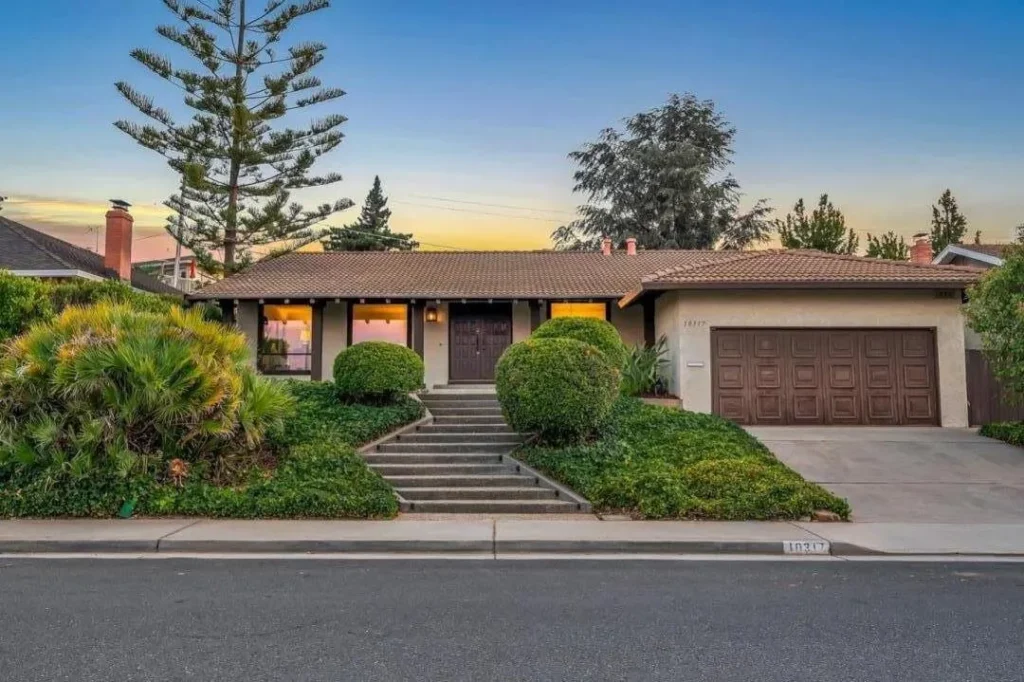
Picture a dated 1960s ranch house in the South Bay worth about $1,200,000 if it were fixed up, with a tired roof, original bathrooms, and some deferred maintenance. These figures are illustrative, so plug in your own.
| Line item | Listing path | Cash path |
|---|---|---|
| Sale price | $1,170,000 | $1,000,000 |
| Commissions (5%) | −$58,500 | $0 |
| Repairs, paint, staging, cleanout | −$45,000 | $0 |
| Carrying costs ($6,000 a month) | −$24,000 (4 months) | −$6,000 (1 month) |
| Escrow, title, and transfer tax | −$9,000 | −$6,000 |
| Net before loan payoff | $1,033,500 | $988,000 |
In this version, listing nets about $45,500 more, even though the cash offer’s headline price is $170,000 lower. That’s the honest answer for a lot of homes, and it’s why we always show sellers both numbers. Now change two inputs: the inspection turns up $100,000 of roof and foundation work instead of $45,000, and the buyer asks for a $20,000 credit on top of that. The listing path drops to $958,500, and the cash path comes out about $29,500 ahead, four months sooner, with no contractors to manage.

Curious about selling your Bay Area home off-market?
All that hassle can add stress, months to the process, and in the end after paying the agent’s expensive fees, you may or may not be ahead of the game.
Request a Ballpark Offer!
Fill out this form to request a quick, no-obligation Ballpark Offer on your home – right over the phone. Get a price range for a quick off-market sale
- Get a ballpark offer over the phone or even via text message
- No visit to your home is required
- There’s absolutely no obligation
- Get a solid idea what you can sell for quick, quietly, off-market
The Variables That Flip the Answer
- Repair scope. Big-ticket items like roofs, foundations, sewer laterals, and old electrical panels cost far more in the Bay Area than most owners expect, and buyers in a listing usually ask for credits on top of whatever you fix.
- Months on market. Every extra month of carrying costs narrows the listing’s advantage, and a deal that falls out of escrow can add two months at once.
- Your carrying costs. A longtime owner with a paid-off house and a low Prop 13 tax bill may only spend a few hundred dollars a month to hold the property, which favors listing. A newer owner with a large mortgage and a reassessed tax bill feels every month.
- Commission rate. Since the 2024 NAR settlement, commissions are more visibly negotiable, and whether you offer to pay the buyer’s agent is now a separate decision. A lower total commission favors listing.
What the Comparison Does Not Capture
Net proceeds aren’t the only variable. A listing means showings, open houses, cleaning, and the risk that a buyer’s financing or appraisal collapses three weeks into escrow. A cash sale trades some price for a closing date you can plan around. If you’re carrying two mortgages, relocating on a deadline, or settling an estate with siblings in three different states, that certainty has a dollar value a spreadsheet won’t show. If you’re still weighing the two paths, we compare them in more depth in should you list with an agent or sell directly.
How to Verify a Cash Buyer and Avoid Scams
Fraud prevention starts with verification before you sign anything. Most sellers who get burned skipped at least one of the four checks below, so run all four, even when the buyer seems friendly and the offer looks great.
1. Confirm the Entity Exists and Is in Good Standing
Ask for the buyer’s full legal business name, not just a trade name or website, and look it up on the California Secretary of State’s business search to confirm the entity is active and in good standing. An LLC formed last month isn’t automatically a problem, but it’s worth asking who’s behind it and how many homes they’ve closed.
If the buyer or their representative claims to be a licensed real estate agent or broker, check the license with the California Department of Real Estate license lookup. License status and any disciplinary history are public record.
2. Verify Proof of Funds, Not Just a Promise
Proof of funds should come from a recognized financial institution, cover at least the purchase price, and be dated within the last 30 days. Acceptable forms include:
- A bank or brokerage statement, or a letter on the institution’s letterhead
- A letter from a hard money or private lender confirming committed funds for this purchase
- Confirmation from the escrow or title company that funds are on deposit
A mobile banking screenshot is easy to fake, but a letter you can verify by calling the bank is not. Look up the institution’s phone number yourself rather than using the one printed on the letter, and call to confirm.
3. Read the Contract for Assignment and Cancellation Clauses
Two kinds of clauses cause most of the trouble. The first is the assignment clause, which lets the buyer transfer the contract to someone else before closing. Some legitimate investors use it routinely, but others use it to lock you into a price and then shop your contract to other buyers at a markup. If the contract says “and/or assigns” after the buyer’s name, ask directly whether they plan to close themselves.
The second is bait-and-switch pricing. Watch for language that lets the buyer lower the price after an inspection, after a title review, or at any point before closing, and for a long inspection period that keeps your house tied up while they look for reasons to renegotiate.
Also confirm:
- The earnest money amount, when it’s due, and that it goes to escrow
- The closing date, and whether the buyer can extend it on their own
- Every contingency and how many days each one lasts
- Which closing costs each side pays
4. Keep Funds in the Title or Escrow Channel
All money should move through a licensed escrow company, title company, or real estate attorney, never a personal account, a wire to an individual, or a payment app. Escrow is a neutral third party that holds the deposit and pays out the proceeds at closing. If a buyer asks you to pay any fee upfront, stop. Wire fraud is also a real risk in closings, so confirm any wiring instructions by calling escrow at a number you looked up yourself. The CFPB explains how closing scams work, and you can report one to the FBI’s Internet Crime Complaint Center.
Red Flags Worth Walking Away From
- Pressure to sign the same day or within hours
- Any request for an upfront fee, application fee, or “processing” charge
- An offer to buy sight unseen that comes with a long inspection period
- A buyer who insists on using their own escrow company and won’t consider yours
- An offer to “save” your home from foreclosure that asks you to sign the deed over while you stay as a renter
A Simple Verification Checklist
- Get the legal entity name and check it with the California Secretary of State.
- Verify any claimed real estate license with the Department of Real Estate.
- Request dated proof of funds from a named institution and call to confirm it.
- Read the contract for assignment, price-reduction, and contingency clauses.
- Confirm all funds flow through a licensed escrow, title, or attorney channel.
- Have a real estate attorney review the contract before you sign.
A legitimate buyer welcomes every one of these steps and gives you time to complete them. Speed is the product they’re selling, but speed should never mean skipping verification.
Contract Terms, Cancellation Rights, and Legal Considerations
Read every purchase agreement carefully before signing. Look for the earnest money amount, the closing date, every contingency, and any clause that lets the buyer renegotiate after an inspection. California has no general cooling-off period that lets a seller back out of a signed home sale, so once you sign, you’re usually committed unless the contract itself gives you a way out.
California Rules That Protect Sellers
There is one big exception. If a notice of default has been recorded against your home and you live there, California’s Home Equity Sales Contract Act (Civil Code section 1695.4) lets you cancel a sale to an investor until midnight of the fifth business day after you sign, or until 8 a.m. on the day of the scheduled foreclosure sale, whichever comes first. The contract has to spell out that right in a specific notice. If a buyer skips it, that’s a serious warning sign.
Selling as-is also doesn’t excuse you from disclosure. Most California sellers still have to complete the Transfer Disclosure Statement under Civil Code section 1102, along with natural hazard and other required forms. Some sellers, such as court-supervised probate estates and some trustees, are exempt from that particular form, but no one is allowed to hide a known material defect. Our guide to California seller disclosures covers what you have to share.
California doesn’t currently have a law specifically regulating real estate wholesalers. A 2026 bill that would have required wholesalers to hold a real estate license and disclose that they don’t intend to take title, AB 1850, stalled in committee. Until something like it passes, the verification steps above are your best protection.
Taxes and Withholding at Closing
Escrow may be required to withhold 3⅓% of the sale price for California income tax unless you qualify for an exemption, such as selling your principal residence or selling for $100,000 or less. The Franchise Tax Board explains the rules, and you claim exemptions on Form 593. On the federal side, you may be able to exclude up to $250,000 of gain ($500,000 for married couples) on a home you’ve owned and lived in for two of the last five years, as described in IRS Publication 523. Inherited homes generally get a stepped-up basis, which often wipes out most of the gain. Confirm your situation with a CPA or tax attorney before you close.
Making the Decision: A Framework for Your Priorities
The right choice depends on what you value most. Use this framework to sort it out:
| Your Priority | Usually the Better Fit |
|---|---|
| Speed and a guaranteed closing date | Cash buyer |
| Maximum price, with time to wait | Traditional listing |
| Property needs major repairs | Cash buyer |
| Home is move-in ready in a strong market | Traditional listing |
| Out-of-area owner or inherited property | Cash buyer |
| Tenants in place or a home full of belongings | Cash buyer |
| You want to avoid showings entirely | Cash buyer, or a quiet off-market sale |
If certainty, speed, and zero repairs top your list, a cash sale usually wins. If you have a few months to spare and a home in good condition, a listing will often net more. Either way, the decision gets a lot easier once you know what your home is actually worth today, so start there before you weigh any offer.
Related reading: How to Sell Your House Fast in the Bay Area: 9 Strategies That Work.
What’s
YOUR HOME WORTH?
Selling a home under pressure is stressful, and the wrong buyer can make it worse. Bay Area Buyers Network is run by Seb Frey, a licensed California real estate broker who has been helping Bay Area homeowners since 2003. We connect you with vetted cash buyers who purchase homes in any condition, with no repairs, no staging, and no commission on a direct sale, and we’ll show you how a cash offer compares to listing so you can choose with real numbers in front of you. When you’re ready, get your quick and easy offer and close on your timeline.
Frequently Asked Questions
Is selling your house for cash a good idea?
It depends on your priorities and your home’s condition. A cash sale trades top dollar for speed, certainty, and convenience: you skip repairs, showings, and commissions, and you pick the closing date. It tends to make the most sense when the home needs major work, is vacant or inherited, or comes with a deadline like a foreclosure or relocation. Compare net proceeds from both paths before you decide.
How long does it take to sell a house for cash?
Once you accept an offer, a cash sale can often close in 7 to 14 days, compared with roughly 30 to 45 days for a financed sale. The timeline depends on the title search, your mortgage payoff, and clearing any liens. Probate, trust, or ownership questions can add weeks. You can also choose a later closing date if you need time to move.
How much less will a cash buyer pay for my house?
Cash offers usually come in below full market value because the buyer takes on the repairs, holding costs, resale costs, and risk. How far below depends mostly on the condition of the home and the size of the repair bill. The gap matters less than your net proceeds, so compare the offer against what a listing would leave you after commissions, repairs, carrying costs, and closing costs.
How do I compare cash offers for my house?
Compare net proceeds, not just the offer price. Ask each buyer for a written breakdown of who pays closing costs, plus the deposit amount, the inspection period, and the closing date. Request proof of funds and a copy of the purchase agreement. A slightly lower offer with a short inspection period and no assignment clause is often worth more than a higher offer that gives the buyer weeks to renegotiate.
Do I pay closing costs when I sell for cash?
Sellers usually still pay their share of escrow and title fees, the county transfer tax, and any city transfer tax, plus prorated property taxes. Some cash buyers agree to cover some or all of the closing costs, so ask for that in writing. You typically won’t pay a real estate commission on a direct sale to a cash buyer.
Can I back out after accepting a cash offer in California?
California has no general cooling-off period for home sellers, so a signed purchase agreement is usually binding unless the contract gives you a way out. The main exception is the Home Equity Sales Contract Act: if a notice of default has been recorded on the home you live in, you can cancel a sale to an investor until midnight of the fifth business day after signing, or until 8 a.m. on the day of the foreclosure sale, whichever comes first.
Do I still have to make disclosures if I sell as-is for cash?
Yes, in most cases. Selling as-is means you won’t make repairs, but most California sellers still have to complete the Transfer Disclosure Statement and other required disclosures. Some probate estates and trustees are exempt from that form, but no seller is allowed to conceal a known material defect.
How can I avoid scams when selling my house for cash?
Check the buyer’s legal entity with the California Secretary of State and any claimed license with the Department of Real Estate. Get proof of funds and confirm it by calling the bank yourself. Read the contract for assignment and price-reduction clauses, never pay an upfront fee, and keep all money moving through a licensed escrow or title company. Confirm wiring instructions by phone using a number you looked up yourself.
